
A simple way to practice steady beat, movement, and musical expression
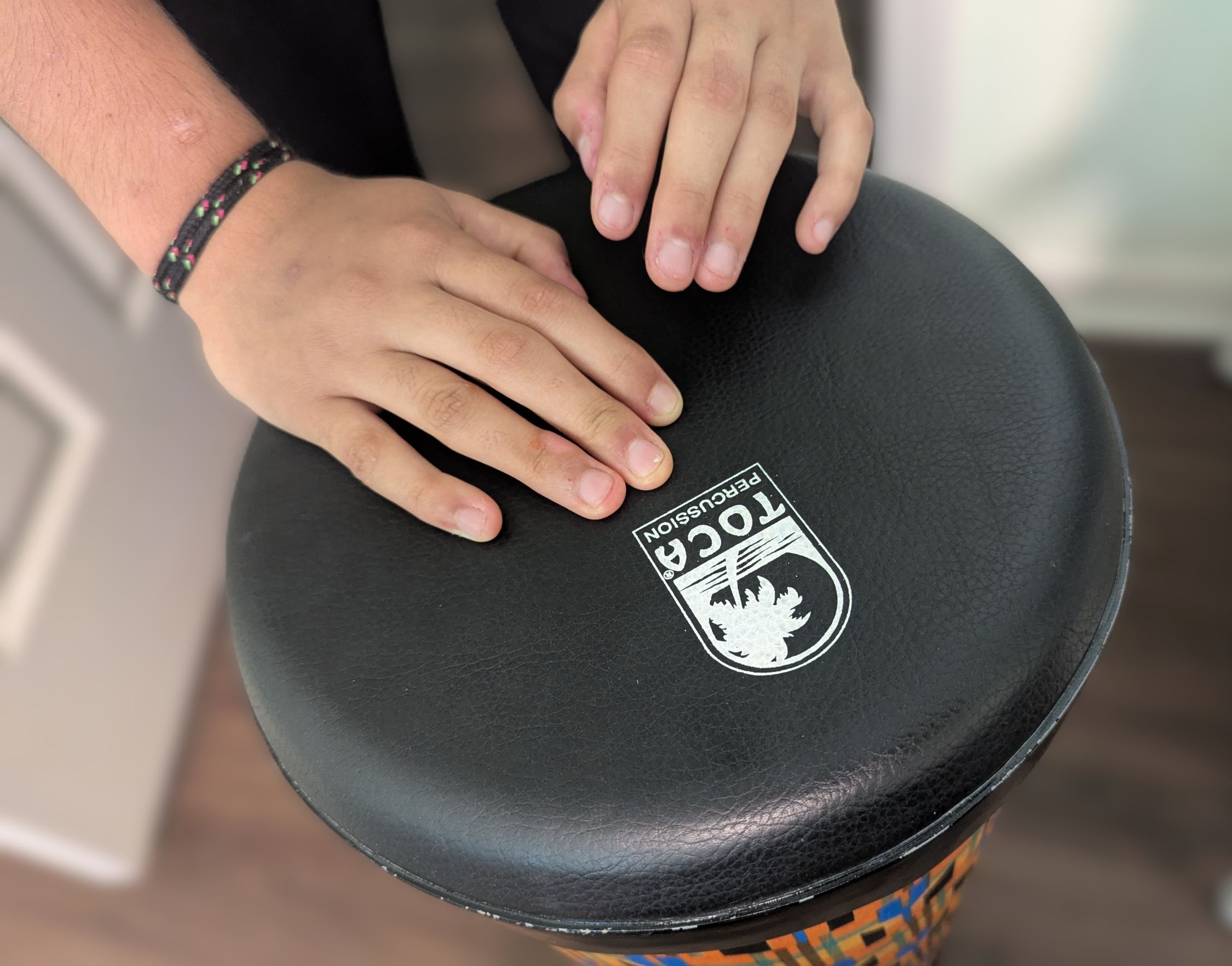
When I was a teacher, I was always looking for new ways to practice the steady beat with my students. And while kids LOVE the Freeze game, even our favorite activities can start to feel a little predictable after a while!
So why not combine the two?
Enter: The Steady Beat Freeze Game!
Students move to the steady beat while one student plays a drum. When the drum stops, everyone freezes!
It’s simple, requires very little preparation, and gives students the chance to feel, hear, and respond to the steady beat while they’re having fun. Even better, you can easily observe individual students and see who is really keeping the beat.
MATERIALS
- One drum
LET’S PLAY!
- Get the beat in their bodies.
Start drumming a steady beat using a moderate tempo. Have them walk in a circle or around the room to the beat. - Introduce the freeze.
Tell students:
“When I play the steady beat, you move to the beat. When I stop, you freeze!”
Start playing—and stopping—at random.
- Change it up!
Once students understand the game, experiment with how you play the drum.
Try playing:
- Loudly — Can their movements become big?
- Softly — Can they tiptoe or make tiny movements?
- Quickly — Can they move faster? (This one is my favorite! watching them start and stop is so fun!!)
- Slowly — Can they move in slow motion?
It isn’t just about the steady beat any more, now you’re giving students opportunities to respond to dynamics and tempo too!
- Put students in charge.
Let students take turns being the drum leader. This is where the activity gets especially cool!
As students lead, watch what they do. Do they play a steady beat? Do they change the tempo? Do they experiment with dynamics? Do they create long rests?
- Talk about what they noticed.
After everyone has had a turn, ask:
- What happened when the beat got faster?
- What did you do when the drum got softer?
- Did anyone notice something interesting about the way our leaders played?
MAKE IT THEIR OWN
One of the best things about this activity is seeing how students put their own personalities into it.
One student played the drum with his elbow because he remembered seeing me do it the year before. Another student took really long rests. Some students played loudly and dramatically, while others experimented with quiet sounds and gentle movements.
This is the most exciting part!
They’re not just following directions—they’re making musical choices.
While one student is leading, I can watch the rest of the class and quickly check who is responding to the beat, who is anticipating the stops, and who may need a little more practice.
The kids think they’re playing a game. I know they’re building the musical skills that matter. 😉
0 Comments